By Margaret Ellison — Independent Veterans Benefits Writer | Reviewed & updated August 9, 2026
Independent and non-government. This site is not affiliated with, endorsed by, or sponsored by the U.S. Department of Veterans Affairs (VA) or any government agency. For official information, visit VA.gov.
Getting to Treatment Should Not Be the Hardest Part of the Week
The VA Veterans Transportation Service is the part of the VA health care system that exists for one simple reason: a scheduled appointment only counts if the veteran can actually get there. For a veteran living with mesothelioma or another asbestos-related illness, the calendar can fill up fast — oncology visits, imaging, pulmonary function testing, infusion days, follow-ups with a thoracic surgeon two hours away. Any one of those is manageable. Twelve of them in a month, with no car, or with a spouse who can no longer safely make the drive, is a different problem entirely. Transportation is quietly one of the most common reasons appointments get missed, and missed appointments are one of the most common reasons treatment plans slip.
This guide explains what the program is, who can use it, how the pieces fit together, and how to actually book a ride — in plain English, without promising you an outcome the VA has not offered you. Every medical center runs its rides program a little differently, so the goal here is to give you the vocabulary and the questions to ask, so that one phone call to your facility gets you a real answer instead of a transfer loop.

Part 1: What the VA Veterans Transportation Service Actually Is
The VA Veterans Transportation Service — often shortened to VTS by VA staff — is a national program that gives VA medical centers the authority and the funding to move veterans to and from VA care. It sits inside the broader VA Veterans Transportation Program, an umbrella that also covers mileage reimbursement, volunteer driver networks, and grant-funded rural transport. VTS specifically is the piece that puts vehicles, drivers, and mobility managers on VA payroll at the facility level.
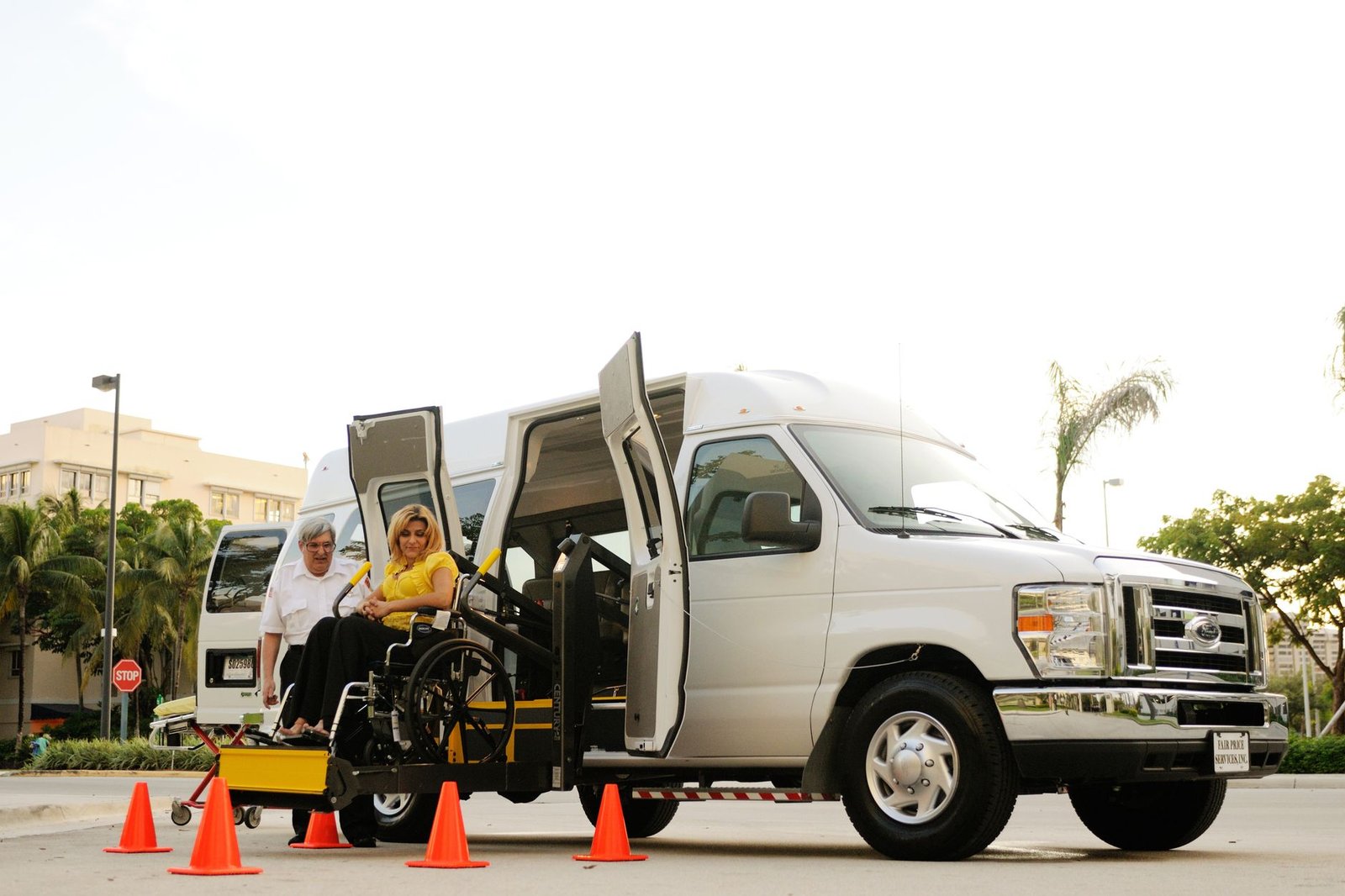
In practice, VTS at a given medical center might look like a fleet of accessible vans running fixed loops between outlying towns and the main hospital. At another facility it might be a smaller operation that arranges individual pickups, or contracts with a local transit provider. Many facilities employ a Mobility Manager — a staff member whose entire job is knowing every transportation option available in that catchment area and matching veterans to the right one. If you learn only one term from this article, make it that one. Asking the operator for “the Mobility Manager” is often the single fastest way to get a useful answer.
The program was built because the VA serves an unusually dispersed population. Roughly a quarter of enrolled veterans live in rural areas, and a large share of the mesothelioma population is over 70, which means driving may already be limited by vision, fatigue, oxygen use, or medication side effects. The VA’s own Veterans Transportation Program page is the canonical starting point and lists the components that make up the system.
One clarification worth making early: VTS is a service, not a cash benefit. It does not put money in your account. It puts a vehicle at your curb. That distinction matters when you start comparing it to Beneficiary Travel, which we cover in Part 6.
Part 2: Who Is Generally Eligible for a VA Ride
Eligibility for rides is tied to VA health care enrollment and to the nature of the appointment. Generally speaking, a veteran who is enrolled in VA health care and traveling to a VA-authorized appointment is the core audience. That includes appointments at a VA medical center, a community-based outpatient clinic (CBOC), and in many cases a community care provider the VA has authorized on your behalf.
Beyond that baseline, facilities apply their own operational criteria, because demand almost always exceeds seats. Common factors that facilities weigh include:
- Whether the veteran has a documented mobility limitation, uses a wheelchair, or requires a stretcher
- Whether the veteran is receiving treatment that makes driving unsafe afterward — sedation, infusion, certain pain medications
- Distance from the facility and whether public transit exists at all in that corridor
- Whether the veteran is a service-connected veteran traveling for treatment of that condition
- Whether a caregiver or family member is available to drive
Note that none of those are guarantees. A facility may have a waiting list, a service radius, or blackout days. The honest framing is that most enrolled veterans with a genuine transportation barrier may qualify for some form of assistance, but which form depends heavily on where you live. A veteran in a metro area with a large VA campus and a veteran in a frontier county three hours from the nearest CBOC will often end up in completely different programs — both legitimate, both under the same umbrella.
Caregivers and escorts are a frequent question. Many VTS vehicles can accommodate one attendant when the veteran medically needs assistance, but seat capacity is real and policies vary. Always declare an escort at booking rather than showing up with one.
Part 3: How the Pieces Fit Together — VTS, DAV Drivers, and Rural Grants
The transportation umbrella has three main moving parts, and knowing which one is answering your call saves an enormous amount of confusion.
VTS vehicles and staff drivers. These are VA-operated. The vehicles are often wheelchair-accessible, the drivers are VA employees or contractors, and scheduling runs through the facility’s transportation office.
The DAV Transportation Network. Disabled American Veterans has run a volunteer driver network at VA facilities for decades, staffed by volunteers driving vans that DAV has frequently donated to the VA. A DAV Hospital Service Coordinator at each participating facility coordinates the schedule. This network is a workhorse — but volunteers generally cannot handle wheelchairs or provide hands-on assistance, and routes tend to run on a fixed morning-out, afternoon-back rhythm. You can find local information through DAV’s transportation page.
Highly Rural Transportation Grants (HRTG). These are grants the VA awards to Veterans Service Organizations and state veterans agencies to move veterans in counties with very low population density. If you live somewhere that the map calls “highly rural,” this may be the only option that reaches you, and it will not be operated by the VA directly.
| Option | Who drives | Best for |
|---|---|---|
| VTS | VA staff / contractor | Accessibility needs, stretcher, complex routing |
| DAV Network | Trained volunteers | Ambulatory veterans on regular clinic schedules |
| HRTG | VSO or state agency | Very low-density rural counties |
A well-run facility treats these as one system. The Mobility Manager’s job is precisely to route you to whichever leg fits. If your first call reaches a person who only knows about one of the three, politely ask to be connected to whoever coordinates the others.
Part 4: What It Costs and What It Covers
Rides provided through VTS and the DAV volunteer network are generally furnished at no charge to the veteran. There is no fare, no per-mile charge, and no copay attached to the transport itself. Any copays you might owe are for the medical care, not the ride, and those are governed by your priority group and service-connection status.
What the ride covers is narrower than people expect. These programs move veterans to and from authorized health care. They are not a general-purpose errand service. A ride to chemotherapy is squarely in scope. A ride to the pharmacy across town afterward usually is not, though some facilities will build a pharmacy stop into a return trip if you ask in advance. Rides to non-VA appointments are typically only covered when the VA authorized that community care in the first place.
Emergency transport is a separate world entirely. VTS is not an ambulance service and cannot respond to an emergency. If someone is in crisis, call 911. Ambulance and other special-mode transport is handled under different VA rules, and reimbursement for it has its own criteria — the VA’s travel pay page explains the special-mode category and how to file.
As of the 2026 rate tables, mileage reimbursement rates and the deductible amounts that apply to Beneficiary Travel are published and updated by the VA rather than fixed in statute, so check the official page rather than relying on a figure you read anywhere — including here. Rates change, and a stale number in your head can lead to a bad decision about which program to use.

Part 5: How to Schedule a Ride Through the VA Veterans Transportation Service
Here is the practical sequence most veterans follow. It is not glamorous, but it works.
- Confirm the appointment first. Transportation is booked against a confirmed appointment date, time, and clinic. If you are still juggling dates, settle those first.
- Call your facility’s main number and ask for the transportation office or the Mobility Manager. You can look up your facility’s number through the VA’s facility locator. If your facility has a DAV Hospital Service Coordinator, that person may be listed separately.
- Book early. Many facilities want three to five business days of notice, and popular routes fill sooner. For a recurring treatment cycle, ask whether you can book the whole series at once.
- Describe your needs honestly. Wheelchair, walker, portable oxygen, an escort, a service animal, difficulty with steps, sedation on the return leg — say all of it up front. This determines which vehicle is dispatched.
- Get the pickup window and the return plan in writing or by text. Ask specifically what happens if your appointment runs long, and get the dispatcher’s direct number.
- Cancel promptly if plans change. A canceled seat goes to another veteran. Repeated no-shows can affect access at some facilities.
If you use secure messaging, your care team can sometimes flag a transportation need internally — a useful backup when phone lines are busy. Setting that up is one of the quieter advantages of an online account; we walk through it in our guide to managing your VA health records online.
Part 6: How This Compares to Beneficiary Travel and Other Options
The most common point of confusion is the difference between a ride and a reimbursement. Beneficiary Travel is the VA’s mileage reimbursement benefit: you drive yourself (or someone drives you), and if you meet the eligibility criteria, the VA pays you back at a published per-mile rate, often minus a deductible. It is money after the fact. VTS is a vehicle in advance.
Those two programs are not competitors — many veterans use both, on different days. A veteran who feels well enough to drive to a routine lab draw might claim mileage for that trip and book a VTS van for infusion day, when driving home would be unsafe. Beneficiary Travel eligibility has its own rules tied to service connection, income, and the type of appointment, and our sister coverage of mileage reimbursement handles that topic in depth.
Other options worth knowing about:
- Community and municipal paratransit. Many counties run ADA paratransit that will take you to a VA facility. It is often cheap and sometimes free for seniors.
- Local VSO chapters. County veterans service offices and posts of the VFW, DAV, American Legion, and Vietnam Veterans of America frequently keep informal driver lists.
- Telehealth. The best transportation solution is sometimes not traveling. Ask whether a follow-up can be done by video, which can cut a treatment month from eight trips down to four.
- Lodging. For multi-day workups far from home, ask about VA lodging programs before you assume you must drive back and forth.
When a distant specialist is involved — say you are traveling to a high-volume center for an opinion on surgical candidacy — transportation planning and referral planning should happen in the same conversation. Our guide to seeking a second opinion through the VA covers the referral side of that trip.
Part 7: What to Expect on the Day, and How to Make It Easier
Expect the day to be longer than the appointment. Shared rides mean shared schedules. A 10:00 a.m. appointment might mean a 7:30 a.m. pickup and a 3:00 p.m. return if the van is looping through several towns. That is not poor service; it is the arithmetic of shared transport in a big catchment area. Planning for it removes most of the frustration.
Practical things veterans consistently say made their days better:
- Pack a small bag: water, a snack the clinic allows, medications you may need mid-day, a phone charger, a light jacket for cold waiting rooms
- Bring your VA identification card and appointment letter
- If you use portable oxygen, confirm your supply covers the full day plus a margin, not just the appointment
- Write the dispatcher’s number on paper, not only in your phone
- Tell the clinic at check-in that you are on VA transport, so they can flag your return window
- Keep a short medication list in your wallet in case the day goes sideways
Fatigue is the underrated variable. Veterans in active treatment often find that the travel, not the treatment, is what wipes out the following day. If you are noticing that pattern, say so — to the oncology team, to the navigator, to the transportation office. Appointment stacking (bundling labs, imaging, and the clinic visit into one trip) is a standard accommodation, and a care coordinator can often arrange it. If you have not been assigned one, our overview of VA cancer care coordination explains who to ask for.
Part 8: What Families and Caregivers Should Know About the VA Veterans Transportation Service
For spouses and adult children, transportation is often where caregiving stress becomes visible. Driving a loved one to daily radiation for six weeks is a job. It costs fuel, parking, and — for working family members — leave time that is finite. Using VA transport for some of those trips is not abandoning your person. It is rationing a limited resource so you can still be present for the trips that matter most: the scan results, the treatment decisions, the hard conversations.
A few things families should know specifically:
You can call on the veteran’s behalf, within limits. Facilities differ on what they will discuss with a family member. Having a release on file, or being listed as a caregiver, smooths this considerably. Ask the facility what documentation they want before you need it urgently.
Riding along may or may not be possible. If your presence is medically necessary, say so at booking. If it is not, plan to meet at the facility.
Watch the well spouse. Caregiver burnout shows up as missed appointments and short tempers long before anyone names it. Social work services and chaplaincy exist partly for this, and both are free. Families navigating the emotional side of a diagnosis alongside the logistics often find that spiritual and emotional support through VA chaplains is available to the whole household, not just the patient.
Document the burden. Not for a claim — for your own planning. A month of logged trips, hours, and miles tells you honestly whether the current arrangement is sustainable, and it makes the conversation with the care team concrete rather than emotional.
Frequently Asked Questions
Is there any charge for a VA-provided ride?
Rides furnished through VTS and the DAV volunteer network are generally provided at no cost to the veteran. There is no fare and no per-mile charge for the transport itself. Any copays you may owe relate to the medical care you receive, not the ride, and those depend on your priority group and service-connection status. If a facility ever tells you a transport charge applies, ask specifically what program is being billed, because that usually indicates a contracted or special-mode service governed by different rules.
How far in advance should I book?
Most facilities ask for three to five business days of notice, and busy corridors fill earlier than that. If you are starting a treatment cycle with a known schedule, ask whether the whole series can be booked in one call — many transportation offices prefer this because it lets them plan routes. Same-day requests are occasionally accommodated when a seat opens, but you should never build a treatment plan around that possibility.
Can the van take a wheelchair or a stretcher?
Many VTS vehicles are wheelchair-accessible, and some facilities operate stretcher-capable transport. Volunteer-driven vehicles typically are not equipped for either, and volunteers generally are not permitted to lift or physically assist passengers. This is exactly why you should describe your mobility needs at booking rather than at the curb — the answer determines which vehicle is dispatched and, in some cases, which program handles the trip.
Will VA transport take me to a non-VA specialist?
Sometimes. If the VA authorized that community care appointment, transportation to it may be arranged, depending on distance and available resources. If you scheduled the specialist independently and the VA did not authorize the care, transport generally will not be provided. Because community care authorization drives so much of this, confirm the authorization status of any outside appointment before you assume a ride is available.
What if my appointment runs much longer than expected?
Tell the driver or dispatcher as early as you know. Most shared routes have a return window, and dispatchers can often hold a seat or reassign you to a later run if they get warning. Ask for the dispatcher’s direct number at pickup and keep it on paper. If a return truly becomes impossible, the facility’s social work office is the right place to ask about alternatives, including lodging in rare cases.
Can my spouse ride with me?
It depends on seat capacity and on whether an attendant is medically indicated. Facilities that allow escorts usually require them to be declared at booking so a seat is reserved. Showing up with an unannounced companion often means the companion cannot board. If a family member needs to attend the appointment itself, meeting you at the facility in a separate vehicle is frequently the more reliable plan.
I live in a very rural county with no VA van route. What then?
Ask your facility whether a Highly Rural Transportation Grant recipient operates in your county. These grants fund Veterans Service Organizations and state veterans agencies to provide transport where VA-operated routes do not reach. Also ask your county veterans service officer, who often knows about local volunteer networks that never appear in any VA directory. Telehealth for a portion of your visits is worth raising in the same conversation.
Does using VA transportation affect my disability claim or rating?
No. Using a health care service like transportation is not evidence for or against a claim, and it does not change a rating. These are separate systems. Your medical records will reflect the care you received, as they always would, but the fact that you arrived in a VA van rather than your own car is not a factor in any rating decision.
Resources
- VA Veterans Transportation Program — the official umbrella page describing the available transport components.
- VA travel pay reimbursement — mileage, deductibles, special mode transport, and how to file.
- VA facility locator — phone numbers and addresses for medical centers, CBOCs, and Vet Centers.
- Applying for VA health care — enrollment is the gateway to nearly every service described here.
- DAV Transportation Network — the volunteer driver program and local coordinator contacts.
- National Cancer Institute: managing cancer care — general, non-VA guidance on coordinating treatment logistics.
Finding a Veterans Service Officer. A VSO is free, accredited, and often the fastest route to answers your medical center cannot give you. Start with your county or state veterans service office, or contact a chapter of the VFW, DAV, the American Legion, or Vietnam Veterans of America. Many VSOs sit inside VA medical centers, which means you can meet one on a day you are already there for treatment. Ask for an accredited representative specifically.
Final Thoughts: A Ride Is a Small Thing That Protects a Big One
It is easy to treat transportation as a detail — the least medical part of a medical journey. But treatment for mesothelioma and other asbestos-related illness is measured in consistency: showing up for the infusion, showing up for the scan, showing up for the follow-up that catches a problem early. Everything in this article exists to protect that consistency.
If you are early in this and have not yet asked anyone about rides, the entire action item is one phone call to your medical center asking for the Mobility Manager or the transportation office. If you are deep in it and have been white-knuckling the driving for months, the action item is the same call, plus an honest sentence: “This is not sustainable, and I need help with some of these trips.”
Veterans who served on ships, in shipyards, in boiler rooms, and in maintenance bays are not people who ask for help easily. Asking for a ride is not a concession. It is the same practical resource management that got the job done then. Make the call, ask the questions in Part 5, and let the system do the part it was built to do.
Medical disclaimer: This article is for informational purposes only and is not medical advice, diagnosis, or treatment. Consult a licensed physician or your VA care team about your specific situation.