
By Margaret Ellison — Independent Veterans Benefits Writer | Reviewed & updated August 9, 2026
Independent and non-government. This site is not affiliated with, endorsed by, or sponsored by the U.S. Department of Veterans Affairs (VA) or any government agency. For official information, visit VA.gov.
Why a Single Point of Contact Changes Everything After a Diagnosis
VA cancer care navigators for veterans exist for one simple reason: a cancer diagnosis creates more phone calls, appointments, and paperwork than any one person should have to track alone. A veteran diagnosed with mesothelioma after decades-old asbestos exposure may suddenly be dealing with a pulmonologist, a thoracic surgeon, a medical oncologist, a radiology department, a pathology lab, a scheduling clerk, a pharmacy, and a travel office — sometimes across two or three different facilities. Somewhere in that swirl there is usually a nurse or coordinator whose whole job is to keep the pieces connected. Knowing that person exists, and knowing how to reach them, is one of the most practical things a veteran or family member can learn in the first month after diagnosis.
This guide explains, in plain English, what cancer care navigation looks like inside the Veterans Health Administration: who these staff members are, what they generally do and do not handle, how veterans are typically connected to one, and what families can reasonably expect. It is education, not medical advice, and nothing here is a promise about what any particular VA medical center will offer. Programs and staffing vary widely between facilities, and the only way to know what is available where you receive care is to ask.
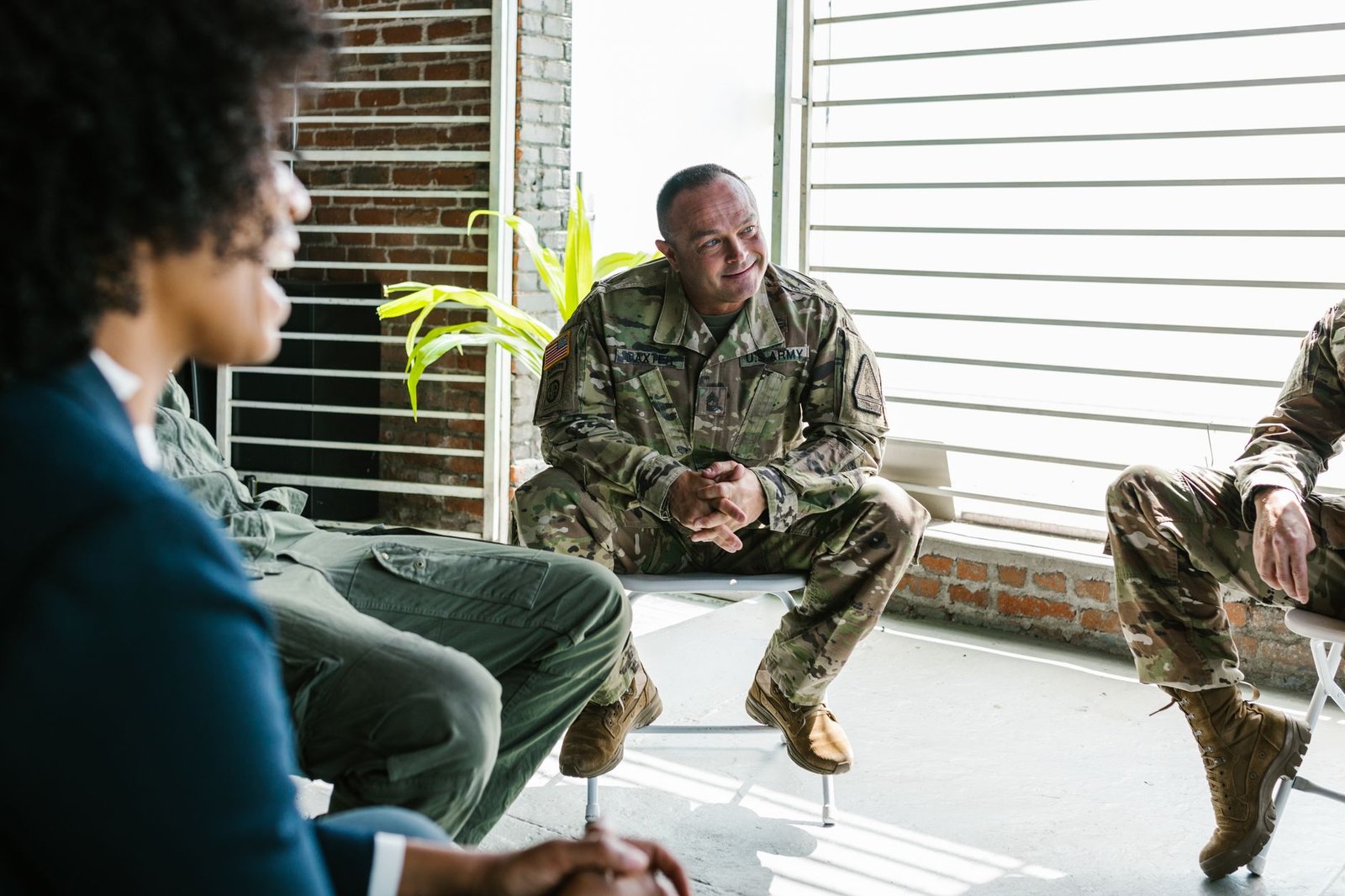
Part 1: What VA Cancer Care Navigators for Veterans Actually Are
The term “navigator” is used loosely across American health care, and the VA is no exception. Depending on the facility, the same function may be called a cancer care coordinator, an oncology nurse navigator, a cancer care navigator, a nurse case manager for oncology, or simply “the oncology nurse.” Titles matter less than the function. In practice, this is a clinical staff member — most often a registered nurse, sometimes a social worker or a specially trained health technician — assigned to help a patient move through cancer diagnosis and treatment without falling through the cracks between departments.
The role grew out of a well-documented problem. Cancer care is not delivered by one clinician; it is delivered by a committee that rarely meets in the same room. A biopsy result has to reach an oncologist. An oncologist’s plan has to reach a surgeon. A surgeon’s schedule has to align with a pre-operative clearance. Each handoff is a place where a patient can be delayed. A navigator’s job is to watch those handoffs.
Within VA, cancer care navigation has been strengthened in recent years alongside the department’s broader oncology modernization work, including the National Oncology Program and services such as teleoncology and precision-oncology consultation. The Department of Veterans Affairs describes its cancer-care approach and the services available to enrolled veterans on the VA health care pages. Cancer navigation has also become a recognized quality standard in American oncology generally — accreditation bodies referenced by the National Cancer Institute have expected patient navigation services at accredited cancer programs for well over a decade.
What a navigator is not: a navigator is not your doctor, does not diagnose, does not prescribe, and does not make treatment decisions. A navigator is also distinct from a VA patient advocate, who handles complaints and service-recovery issues across the whole medical center rather than clinical coordination within an oncology service. Both can be useful. They are not the same office.
Part 2: Who Is Eligible to Work With a VA Cancer Care Navigator
Cancer care navigation is not a separate benefit you apply for. It is a service embedded in VA oncology care. That means the practical eligibility question is the same one that governs almost everything else in the Veterans Health Administration: are you enrolled in VA health care, and are you receiving your cancer care through VA?
Enrollment rules, priority groups, and copay categories are set out on VA’s own health care eligibility pages. Veterans who have never enrolled, or who dropped off years ago, can generally apply at any time; a mesothelioma or asbestos-related diagnosis does not create a separate application track, but it can be highly relevant to how VA handles your care and, separately, to any service-connection question you may pursue. Many veterans with an asbestos-related cancer are eligible for VA health care through their service-connected status, income category, or another qualifying factor — but eligibility depends on your individual record, and only VA can determine it.
A few practical points that come up constantly:
- You do not have to be service-connected for the cancer to receive VA cancer treatment, as long as you are enrolled and eligible for care. Service connection affects copays and compensation, which is a separate question from clinical access.
- You do not need to request navigation by name. At facilities that staff the role, patients are usually flagged automatically when a cancer diagnosis is entered or a tumor board reviews the case.
- Not every VA medical center has a dedicated navigator for every tumor type. Smaller facilities may assign the function to an oncology clinic nurse or a care coordinator covering several conditions.
- Veterans receiving care in the community through VA-authorized community care may still have a VA-side coordinator, though the coordination model differs. Ask specifically who owns your case on the VA side.
Part 3: How Cancer Care Navigation Works Day to Day
Once a veteran is connected to a navigator, the relationship is usually a mix of scheduled check-ins and as-needed contact. In the first weeks, contact tends to be frequent — there are consults to arrange, imaging to sequence, and a treatment plan taking shape. Later, contact often settles into a rhythm around treatment cycles or surveillance scans.
Typical tasks that fall to a navigator include tracking referrals so a consult does not sit unscheduled, making sure imaging and pathology results have reached the clinician who needs them, helping a patient prepare questions before a consultation, explaining what a tumor board is and when a case will be reviewed, arranging interpreter services, and looping in social work, nutrition, or rehabilitation when a need surfaces. Many navigators also help patients understand the sequence of a plan — why a scan comes before a surgical consult, or why a pulmonary assessment is needed before an operation is considered. For veterans facing thoracic surgery, that assessment often includes breathing studies; our guide to breathing tests used in VA evaluations explains what those measurements involve.
Navigators also frequently function as translators. Oncology has a dense vocabulary — staging, histology, resectability, performance status, line of therapy — and most patients meet it for the first time under stress. A good navigator will slow down, repeat, and write things down. Families should feel free to ask for that plainly: “Can you write that down for us?” is a completely reasonable request.
A note on expectations: navigation is a coordination service, not a guarantee of speed. A navigator can chase a referral, but cannot create an appointment slot that does not exist or override a clinical judgment. What they can do is make sure nothing is simply forgotten.
Part 4: What Navigation Covers and What It Costs
Cancer care navigation is generally provided as part of VA clinical care rather than billed as a separate service, so most veterans will not see a distinct charge for talking to a navigator. What can carry costs is the underlying care — outpatient visits, medications, and inpatient stays — under VA’s standard copay structure. As of the 2026 copay and rate tables, those amounts are set by category and can change annually, so the reliable move is to check VA’s current copay rates page rather than relying on a number someone quoted you last year. Veterans with certain service-connected conditions, catastrophic disability status, or qualifying income levels may have reduced or no copays for some care, depending on their situation.
Navigation typically extends to helping a patient understand and connect with support services rather than paying for them. Common examples include:
| Need that comes up | Where a navigator usually points you |
|---|---|
| Getting to appointments | VA travel and transportation programs, volunteer driver networks |
| Appetite loss, weight change | VA clinical dietitian referral |
| Breathlessness at home | Pulmonary service, home equipment evaluation |
| Pain that is not controlled | Oncology team, pain clinic, or palliative care consult |
| Money, housing, family strain | VA social work, and separately a Veterans Service Officer for benefits |
| Spiritual or emotional support | VA chaplain service, mental health, Vet Centers |
Two of those deserve a direct pointer. Weight loss and appetite change are extremely common with thoracic cancers and their treatments, and VA dietitians are a standard part of the oncology team — see our guide to dietitian support during cancer treatment. Uncontrolled symptoms are equally common and equally addressable; our overview of symptom and pain care inside VA covers how those clinics generally work.

Part 5: How to Reach a VA Cancer Care Navigator, Step by Step
There is no single national phone number that connects you to a navigator, because the role is staffed locally. The reliable path is through your own facility. Here is a sequence that works in most cases.
- Start with your VA oncology or specialty clinic. Call the clinic where your cancer care is being managed and ask directly: “Is there a cancer care coordinator or oncology nurse navigator assigned to my case, and how do I reach them?” Use the facility locator on VA’s find-a-location tool to confirm the right number.
- If you do not have an oncology clinic yet, ask your primary care team. Early in a workup, the primary care provider or the referring specialist is usually the person driving referrals, and they can tell you when navigation picks up.
- Send a secure message. Written requests create a record and often reach the right desk faster than a voicemail. If you have not set up your online account, our walkthrough of the VA patient portal and secure messaging explains the steps; VA’s own portal lives at My HealtheVet.
- Ask for the name, role, and best contact method — and write them down. “Someone from oncology” is not a contact. A name and a direct line is.
- If you cannot get an answer, contact the facility’s patient advocate office and ask them to identify who coordinates oncology cases. That is exactly the kind of question the advocate office exists to answer.
- Bring a family member into the loop. With your permission, a navigator can generally speak with a designated family member, which matters enormously on days when a patient is fatigued.
Keep a single notebook or phone note with names, dates, and what was said. Families who do this consistently report far less frustration than those relying on memory across a dozen calls.
Part 6: What to Expect in Practice — and Where the Friction Usually Is
Honest expectation-setting helps. Navigation works well when the navigator is reachable, the case is clearly assigned, and the patient knows what to bring to them. It works less well in a few predictable situations, and knowing them in advance lets you compensate.
Coverage gaps. A navigator is one person with a caseload. Vacation, turnover, and reassignment happen. Always ask who covers when your navigator is out.
Split care between VA and the community. When part of your treatment happens at a non-VA facility under authorized community care, records do not always flow instantly in both directions. Ask who is responsible for making sure outside notes land in your VA record, and follow up. Bringing a copy of your own imaging report or pathology report to appointments is never a bad idea.
Multi-facility care. Veterans in rural areas often see a local community-based outpatient clinic for routine care and travel to a larger medical center for oncology. Two facilities means two schedules. Ask the navigator to confirm which site owns which piece.
The clinical questions belong to clinicians. Navigators will not tell you whether to have surgery, and should not. For treatment decisions, the conversation is with your oncologist and surgeon — and, if you want another perspective, our guide on seeking an additional expert opinion covers how that generally works within VA. Understanding the options themselves is a separate exercise; our overview of surgical approaches available to veterans and of immune-based drug therapy lay out the vocabulary you will hear.
Part 7: How VA Cancer Care Navigators for Veterans Compare to Other Support Roles
Veterans and families often encounter several helping roles in quick succession and understandably blur them together. Keeping them straight saves time, because each one answers a different kind of question.
| Role | Best question to bring them |
|---|---|
| Cancer care navigator / oncology nurse coordinator | “Where is my referral, what happens next, and who needs to see this result?” |
| Patient advocate | “Something went wrong with my care experience and I need it escalated.” |
| VA social worker | “I need help with caregiving, housing, discharge planning, or community resources.” |
| Veterans Service Officer (VSO) | “I want help filing or tracking a VA benefits claim.” |
| Oncologist / surgeon | “What are my treatment options and what do you recommend?” |
| Chaplain | “I need spiritual, moral, or existential support — any faith or none.” |
The VSO distinction is worth emphasizing. Clinical staff inside a VA hospital do not file disability claims and are not accredited to represent you before VA on a claim. That work is done by accredited representatives — service officers from organizations such as the VFW, DAV, American Legion, and Vietnam Veterans of America, or accredited attorneys and claims agents. Asbestos exposure claims in particular have their own evidentiary contours; if part of your exposure history is civilian rather than military, our discussion of post-service shipyard exposure and VA claims explains why occupational history matters. None of that is a navigator’s job — but a navigator can usually tell you where the VSO office in the building is.
Part 8: What Families and Caregivers Should Know About VA Cancer Care Navigators for Veterans
Families do an enormous share of the actual navigating. Spouses drive to appointments, adult children take notes, and someone inevitably becomes the household’s unofficial medical secretary. A few things make that role less exhausting.
Get permission on the record early. Privacy rules limit what staff can discuss with anyone other than the patient. A veteran can authorize VA to release information to a named family member; ask the clinic or the navigator how to complete that authorization at your facility. Doing it in week one prevents a locked door in week six.
Consolidate the paperwork. One folder or one scanned folder on a laptop: pathology report, imaging reports, medication list, appointment calendar, contact names, and any claim correspondence. Bring it to every appointment.
Say what you actually need. Navigators respond to specifics. “He’s very tired” is harder to act on than “he’s sleeping fourteen hours a day and has lost nine pounds in three weeks.” Concrete observations trigger concrete referrals — to nutrition, to rehabilitation, to palliative symptom control.
Plan for recovery, not just treatment. After a major thoracic procedure, most of the work is rebuilding stamina and breathing capacity. Our guide to rehabilitation following chest surgery covers what that phase generally looks like, and for veterans who need supplemental oxygen at home, the home oxygen equipment guide explains the prosthetics and delivery side.
Handle the paperwork nobody wants to think about, calmly and early. Advance directives are not a sign of giving up; they are a way of making sure a veteran’s own wishes govern if a crisis makes them unable to speak. Our overview of VA advance directives walks through the form and the conversation.
Take care of the caregiver. Caregiver fatigue is real and predictable. VA social work, chaplain services, and Vet Center counseling are all available routes for support, and families with children at home may find our guide to explaining a diagnosis to children useful. Asking for help early is not weakness; it is planning.
Frequently Asked Questions
Does every VA medical center have a cancer care navigator?
No. Staffing varies by facility size, tumor volume, and local program design. Larger VA medical centers with established oncology services are more likely to have dedicated navigators, sometimes specialized by cancer type. Smaller facilities and community-based outpatient clinics may fold the function into an oncology clinic nurse or a general care coordinator. The only way to know is to ask your treating clinic directly. If your facility does not staff the role, ask who performs the coordination function instead — someone always does, even if the title is different.
Is there a cost to work with a navigator?
Navigation is generally delivered as part of VA clinical care rather than billed separately, so veterans typically do not see a distinct charge for it. Copays may still apply to the underlying appointments, medications, and hospital care depending on your priority group, service connection, and income category. Because those amounts are updated periodically, check VA’s current copay rates page rather than an older figure. If a copay bill is confusing or looks wrong, VA’s billing office and the patient advocate are the right places to raise it.
Can a navigator help with my disability claim?
Generally no, and that boundary is deliberate. Clinical staff provide care; benefits claims are handled by VA-accredited representatives such as Veterans Service Officers, accredited claims agents, and accredited attorneys. A navigator can point you toward the VSO office at your facility and can make sure your medical records are complete and accessible, which indirectly matters. But the claim itself — forms, evidence, deadlines, appeals — belongs with an accredited representative, and that help is available at no cost through the major veterans service organizations.
What if my treatment is happening at a non-VA hospital?
Veterans receiving VA-authorized community care often still have a VA-side coordinator, though the model differs by facility. Ask explicitly who at VA owns your case, how outside records reach your VA chart, and who to call if an authorization is delayed. In split-care situations, keeping your own copies of pathology and imaging reports is genuinely useful, because you can hand them to whichever clinician is in front of you rather than waiting on a records transfer.
How is a navigator different from a patient advocate?
A navigator works inside your clinical care, coordinating referrals, results, and appointments across the oncology team. A patient advocate works across the whole medical center, handling concerns, complaints, and service-recovery issues when something in the experience has gone wrong. Think of the navigator as forward-looking logistics and the advocate as problem escalation. Many veterans use both at different moments, and neither replaces the other.
Can my spouse or adult child speak with the navigator on my behalf?
Usually yes, with your authorization on file. VA staff are bound by privacy rules and cannot discuss your care with family members who have not been designated. Ask your clinic how to complete a release of information naming the family members you want included. Doing this early avoids a frustrating stall later, particularly on days when fatigue or a hospital stay makes it hard for the veteran to make calls personally.
What should I bring to my first conversation with a navigator?
A short written list of your questions, your current medication list, the names of any non-VA doctors involved, your appointment calendar, and — if you have them — copies of your pathology and imaging reports. Also bring a pen and paper or a family member who will take notes. Ask for the navigator’s name, direct contact method, and who covers for them when they are unavailable. That single piece of information saves more time than anything else.
My navigator changed and nobody told me. What now?
Call the oncology clinic and ask who is currently assigned to your case, then ask that the assignment be documented in your chart. Staff turnover is common in every health system. If you repeatedly cannot get a clear answer about who is coordinating your care, contact the facility’s patient advocate office — establishing a responsible point of contact is a legitimate reason to involve them, and it is generally resolved quickly once raised.
Resources
- VA Health Care — enrollment, covered services, and how VA care is organized.
- VA Facility Locator — phone numbers and clinic listings for every VA medical center and outpatient clinic.
- VA Copay Rates — current copay tables, updated periodically.
- My HealtheVet — VA’s patient portal for secure messaging, prescriptions, and records.
- VA asbestos exposure information — VA’s official page on asbestos-related claims.
- National Cancer Institute (cancer.gov) — plain-language cancer information and treatment summaries.
- American Cancer Society — patient and caregiver support resources.
- ATSDR / CDC asbestos information — federal public health information on asbestos exposure.
Finding a Veterans Service Officer. Accredited representatives help with benefits claims at no charge. The major organizations — VFW, DAV, American Legion, and Vietnam Veterans of America — all maintain service officers, and many are stationed inside VA medical centers or at county veterans service offices. VA maintains a searchable directory of accredited representatives at VA.gov’s accredited representative page. State and county veterans affairs offices are also a reliable starting point, particularly in rural areas.
Final Thoughts: You Are Allowed to Ask for a Name
The most useful thing most families take away from this subject is permission — permission to ask, plainly and repeatedly, “who is coordinating my care, and how do I reach them?” That question is not rude, not unusual, and not a burden on staff. It is the question the whole navigation function was built to answer.
A mesothelioma diagnosis arrives with a great deal that is outside anyone’s control. The logistics are not in that category. Appointments can be sequenced, records can be chased, referrals can be tracked, and support services can be brought in early rather than late. Veterans who served in shipyards, engine rooms, boiler rooms, and maintenance bays generally know how to work a system that has parts and procedures. This is another one. Get the name, write it down, and use it.
And if the answer at your facility is unclear, keep going — to the clinic manager, to the patient advocate, to a service officer. Persistence is not adversarial here. It is simply how large systems get navigated, and you have every right to expect a straight answer about who is helping you.
Medical disclaimer: This article is for informational purposes only and is not medical advice, diagnosis, or treatment. Consult a licensed physician or your VA care team about your specific situation.
Legal disclaimer: This article is for general information only and is not legal advice and does not create an attorney-client relationship. Consult a VA-accredited attorney, claims agent, or a Veterans Service Officer (VSO) about your specific claim.